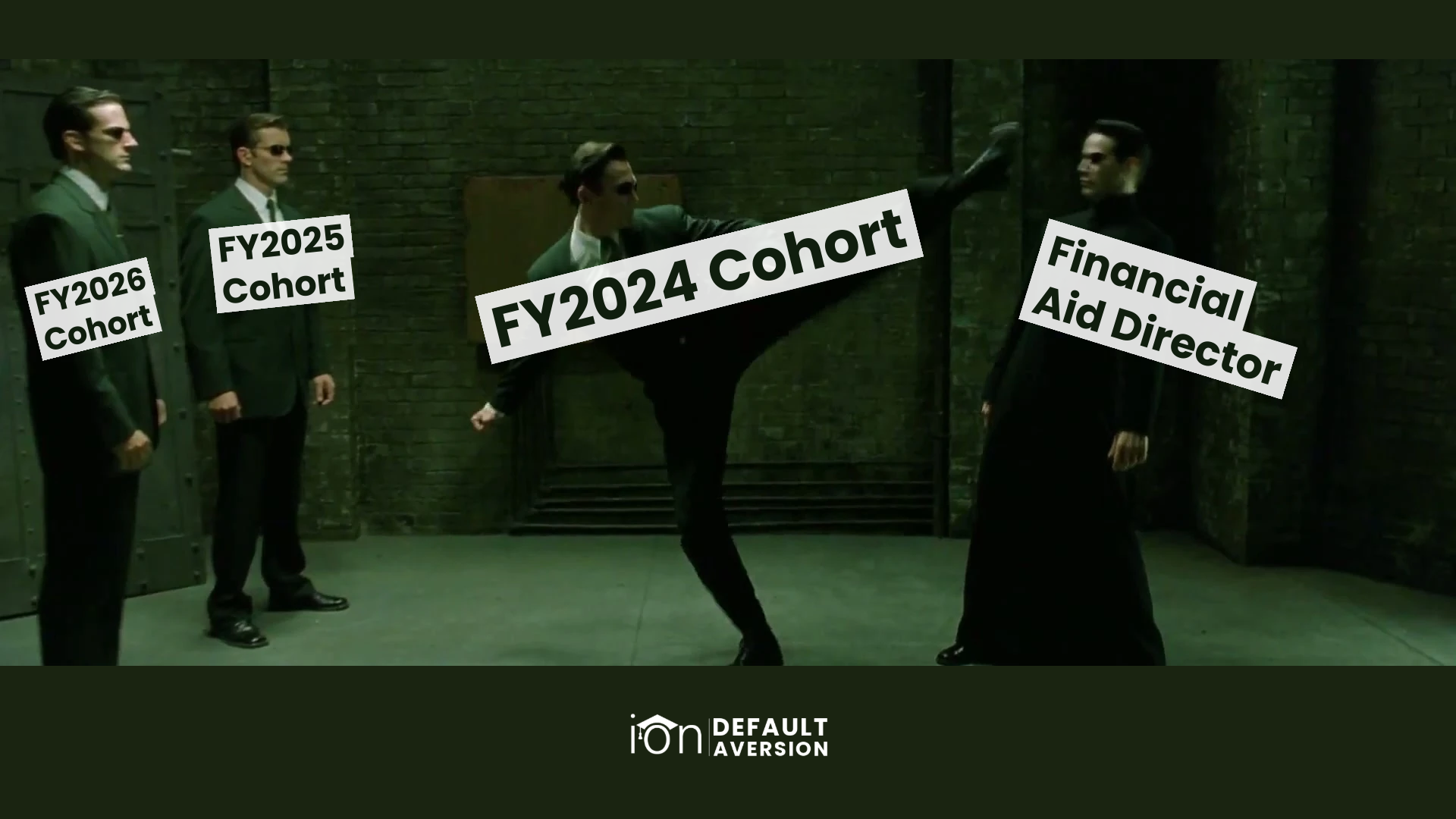
As 2025 closes, institutions are focused on curing the record number of delinquent student loan borrowers from the FY 2024 cohort, while still keeping an eye on the 2025 and 2026 cohorts. As we look to 2026, there are big changes scheduled for July 1, 2026. That date marks when the student loan policies in the “One Big Beautiful Bill Act” (OBBBA) go into effect. Specifically, future lending limits on federal student aid will be reduced.
The Student Loan Default Crisis and New Student Loan Repayment Plans
The current delinquency crisis—the massive wave of borrowers struggling to resume payments after five years of non-payment and promises of forgiveness—is set to intensify. The continuous cycle of new plans and deadlines is creating mass confusion, driving up default risk for millions.
- FY 2024 CDR Deadline: Institutions must cure borrowers in the FY 2024 cohort (where 4–6 million new defaults are predicted) before September 30, 2026.
- New Plan, New Confusion: Effective July 1, 2026, the OBBBA eliminates most existing income-driven repayment (IDR) plans for new borrowers, replacing them with the Repayment Assistance Plan (RAP). Borrowers currently enrolled in IDR plans like PAYE or ICR (and those on SAVE) need to transition by July 1, 2028, to IBR or RAP. This continuous overhaul creates massive borrower confusion, which studies have repeatedly shown is a primary driver of delinquency and eventual default.
Your default aversion work is just beginning. As institutions close out FY 2024 in 2026, institutions will shift focus to managing the newly destabilized FY 2025 and 2026 cohorts as they struggle to navigate another confusing federal repayment transition.
Federal Funding Gap Creates Demand for Private Loans
The OBBBA sets new caps on federal student loans. Parents, graduates, and professional students were previously permitted to borrow federal Direct PLUS loans up to an institution’s full Cost of Attendance (COA). The new law will generate an unmet need that students can fill with private financing.
Effective July 1, 2026, the following key federal loan programs are either eliminated or capped for new borrowers:
| Federal Loan Program | 2026 Change | The New Funding Gap |
| Graduate PLUS Loans | ELIMINATED for new borrowers. | Graduate students can no longer borrow up to the full Cost of Attendance (COA) federally, creating an opportunity for external financing for high-cost professional degrees (e.g., medical, law). |
| Parent PLUS Loans | New caps of $20,000 annual and $65,000 aggregate per student. | 30% of borrowers are expected to hit the federal limit and will require private loans to close the gap. |
| Aggregate Limits | New aggregate limits for Unsubsidized Loans: $100,000 (Graduate) or $200,000 (Professional) lifetime. | Students whose programs exceed these limits must turn to the private market. |
When federal funding isn’t enough, institutions will need to provide gap funding. Institutions will need partnerships that can service both federal and private student loans.
Managing Your 2026 Strategy
2026 demands a unified loan management strategy that addresses federal default risk and the new needs for private loans.
IonTuition provides the best solution for institutions:
- Federal Default Aversion: We execute the high-touch, labor-intensive outreach (up to as many as 82 calls per cure may be required for late-stage accounts) necessary to save borrowers from defaulting and protect your FY 2024, 2025, and 2026 CDRs.
- Private Student Loan Servicing: We offer a strategy to manage the new federal funding gap by providing students with customized counseling needed for their private loans. By ensuring responsible borrowing and repayment planning across all loan types, we help protect your students and your institutional reputation.
The time for reactive measures is over. To safeguard your Title IV eligibility and your student outcomes against current and future changes, contact IonTuition today to implement a comprehensive default aversion and private loan servicing plan.